Switzerland → Croatia · Spring 2026 · First long-distance run with evOS fully operational.
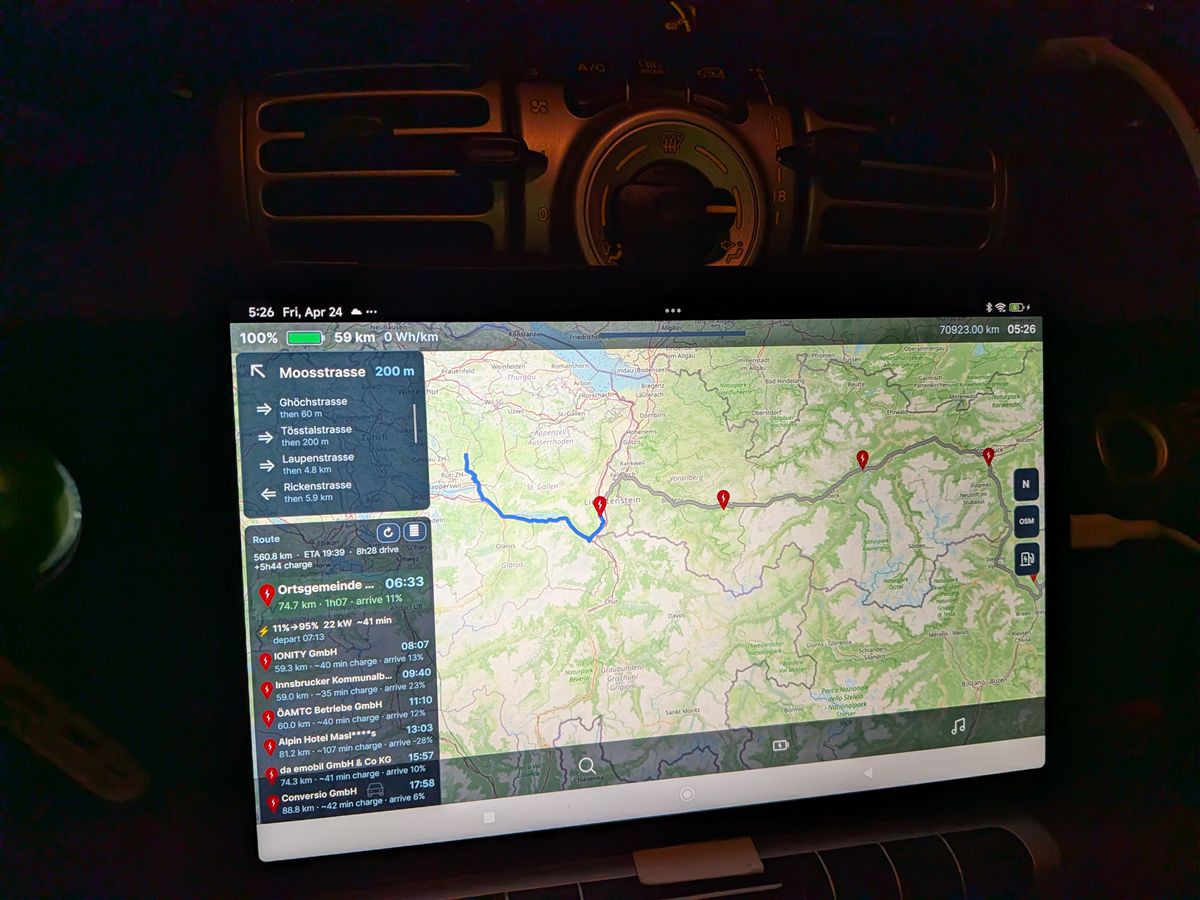
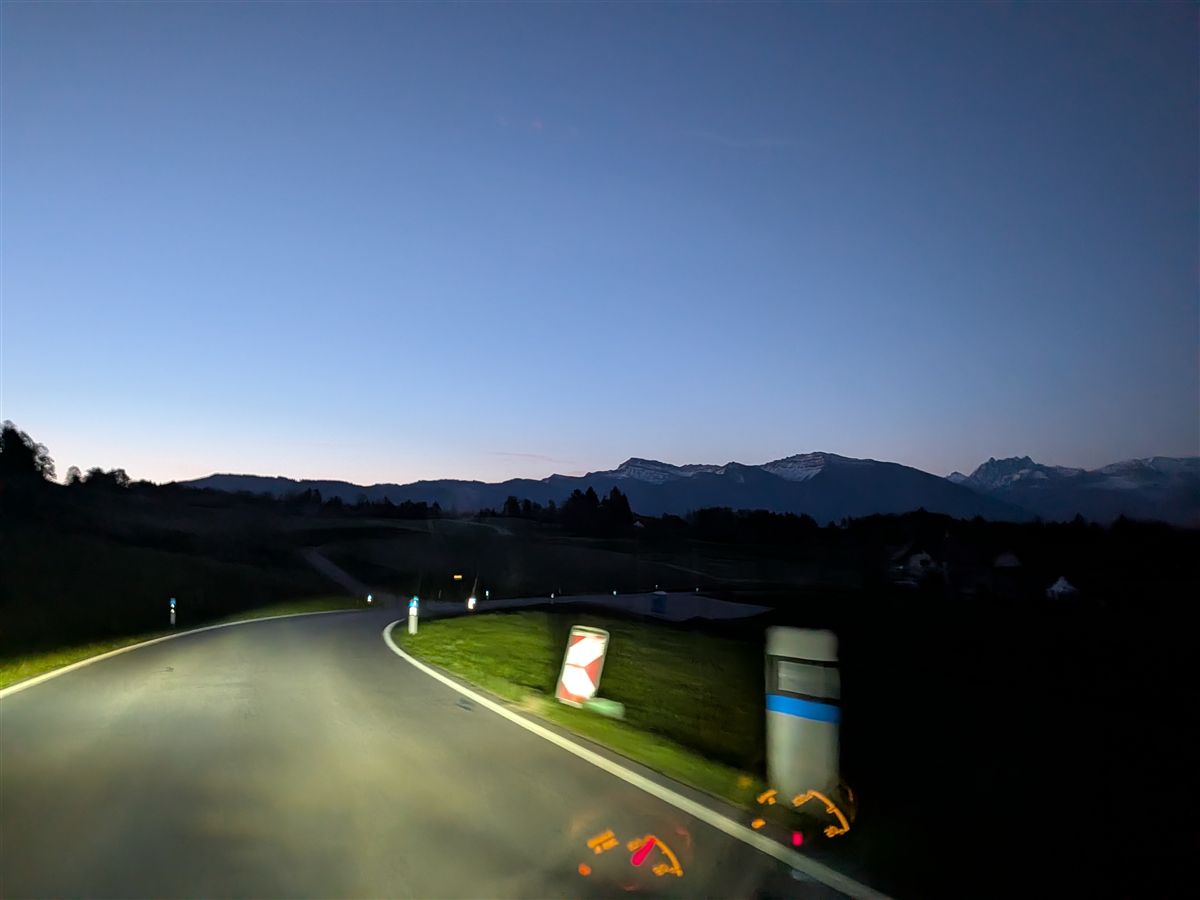
The alarm went off before the birds. At 5:26 AM, streets still empty, evOS had already done its homework: 560 km on the plan for day one, 7 charge stops sequenced, ETA 19:39. Total charging time estimated at 5 hours 44 minutes — more than enough buffer to arrive before dark.
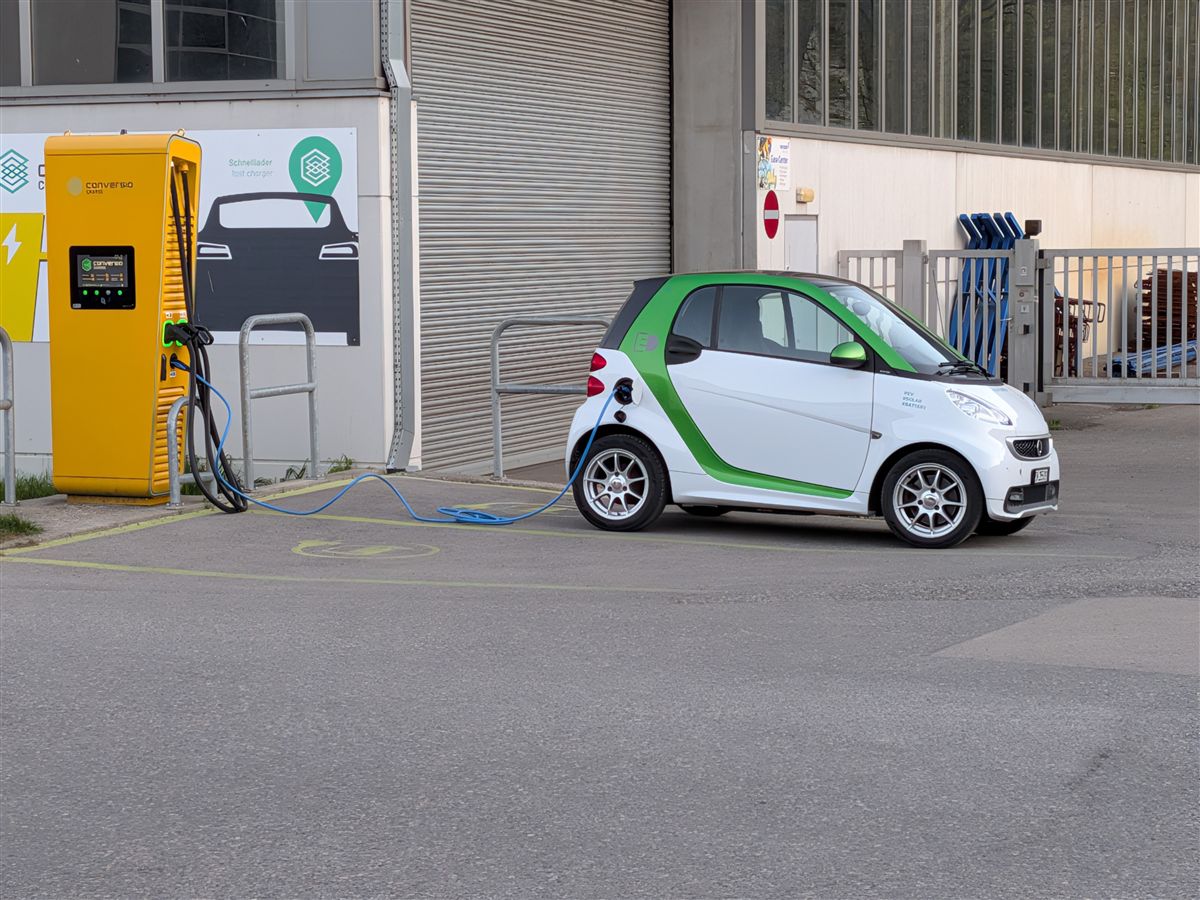
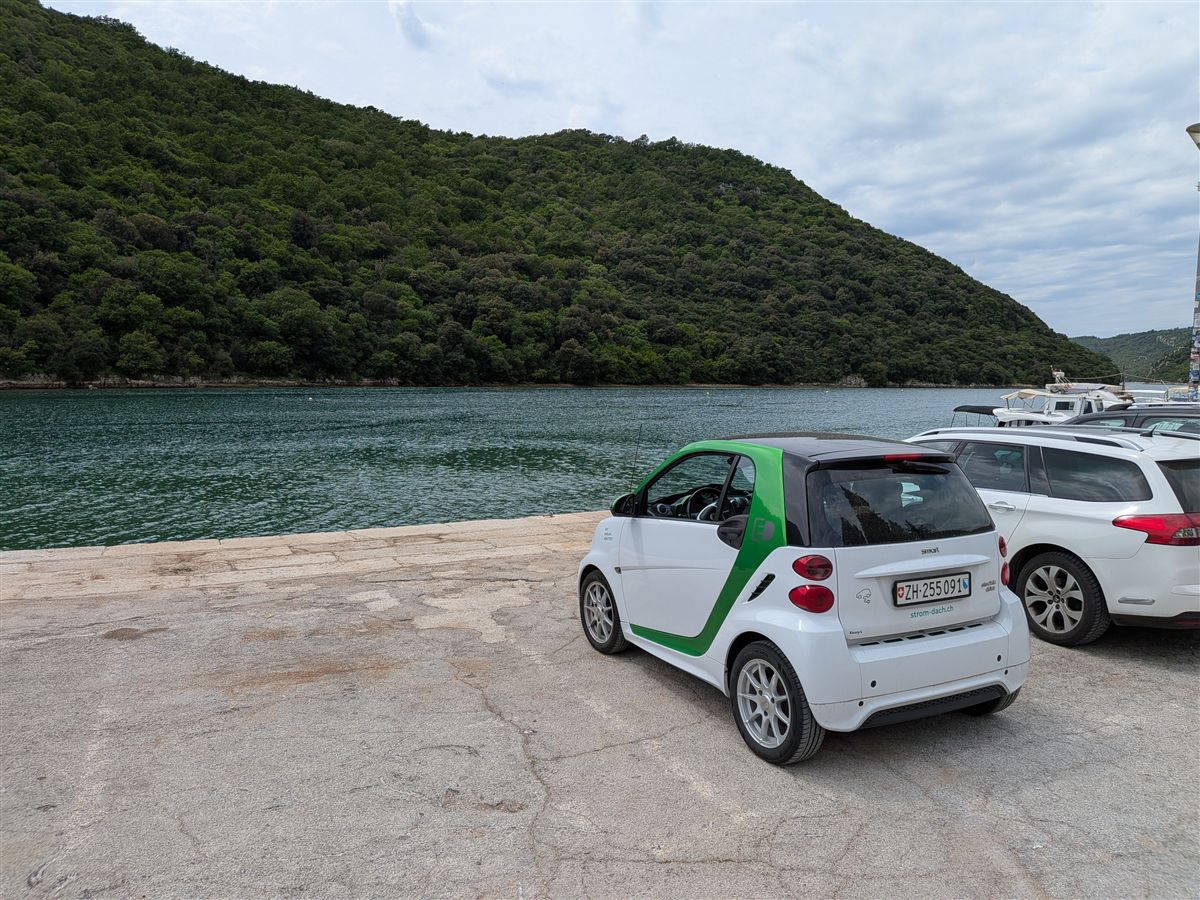
This was the first proper long-haul test of the system. Not a day trip, not a loop around the lake — Switzerland to the Adriatic coast, in a 15-year-old electric city car with a 17.6 kWh battery.
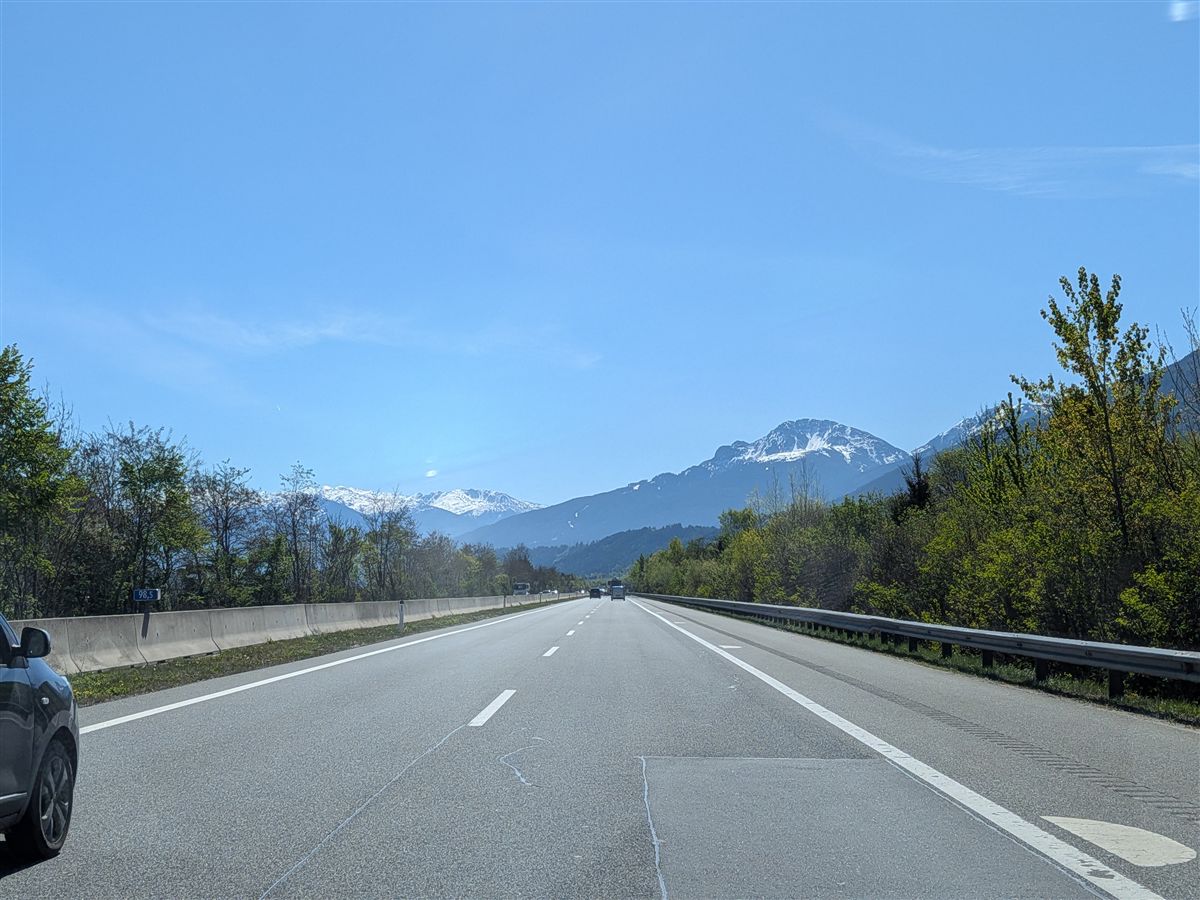
The route: home → Bludenz → Imst → Steinach am Brenner → Kronplatz/Brunico → Oberdrauburg → Spittal an der Drau → overnight → Postojna → Poreč. Through the Alps, over the Brenner, across Carinthia, and down through Slovenia.
Charge stop management was the biggest unknown going in. The smart ED has roughly 100–130 km of real-world range at motorway speeds. Crossing the Alps isn't flat — elevation changes eat into that. evOS accounted for it.
The system planned each stop based on arrival SoC targets, charger power, and estimated drive time — Bludenz, Gewerbepark Imst, Steinach am Brenner, Kronplatz, Oberdrauburg. Each one hit roughly where evOS said it would.
Imst deserves its own paragraph. The plan was to charge at an ELLA charger in the Gewerbepark — a network that had expanded across Austria before being acquired by Wien Energie and folded into their Tanke network. Finding the right building in the industrial estate took a while. Finding the charger took longer. It wasn't there. Gone. Removed at some point between when the data was last updated and when the car needed it. An alternative was found nearby, but the ten minutes spent circling a Gewerbepark in Tyrol are a clear argument for one thing: static charger databases aren't enough. evOS needs live availability data, not just locations.
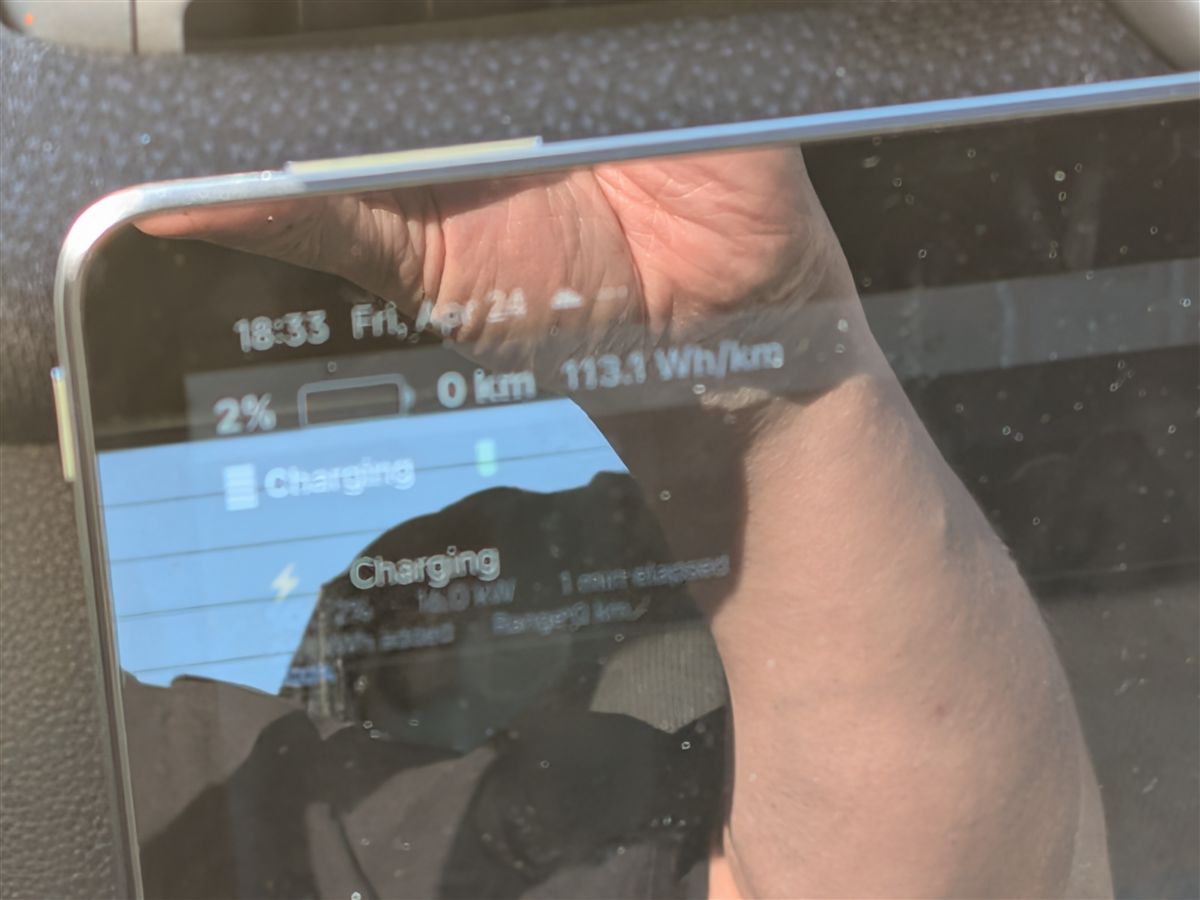
Spittal an der Drau was not as clean. A wrong turn routed the car onto the motorway instead of local roads — 7 extra kilometres at highway speed with 0% showing and 0 km of range. The car made it to the Hypercharger. Just. The charger only needed 30 minutes. The co-pilot needed considerably longer: the McDonald's across the road from the Tesla Supercharger in Spittal is apparently a family institution, remembered fondly from previous trips, and absolutely not negotiable.
Then Velden am Wörthersee: four attempts, four broken or occupied chargers. The fifth worked.
That's the part no routing software fully solves yet. The stops were right. The chargers were not always there.
| Location | Arrived at | Charger | Time |
|---|---|---|---|
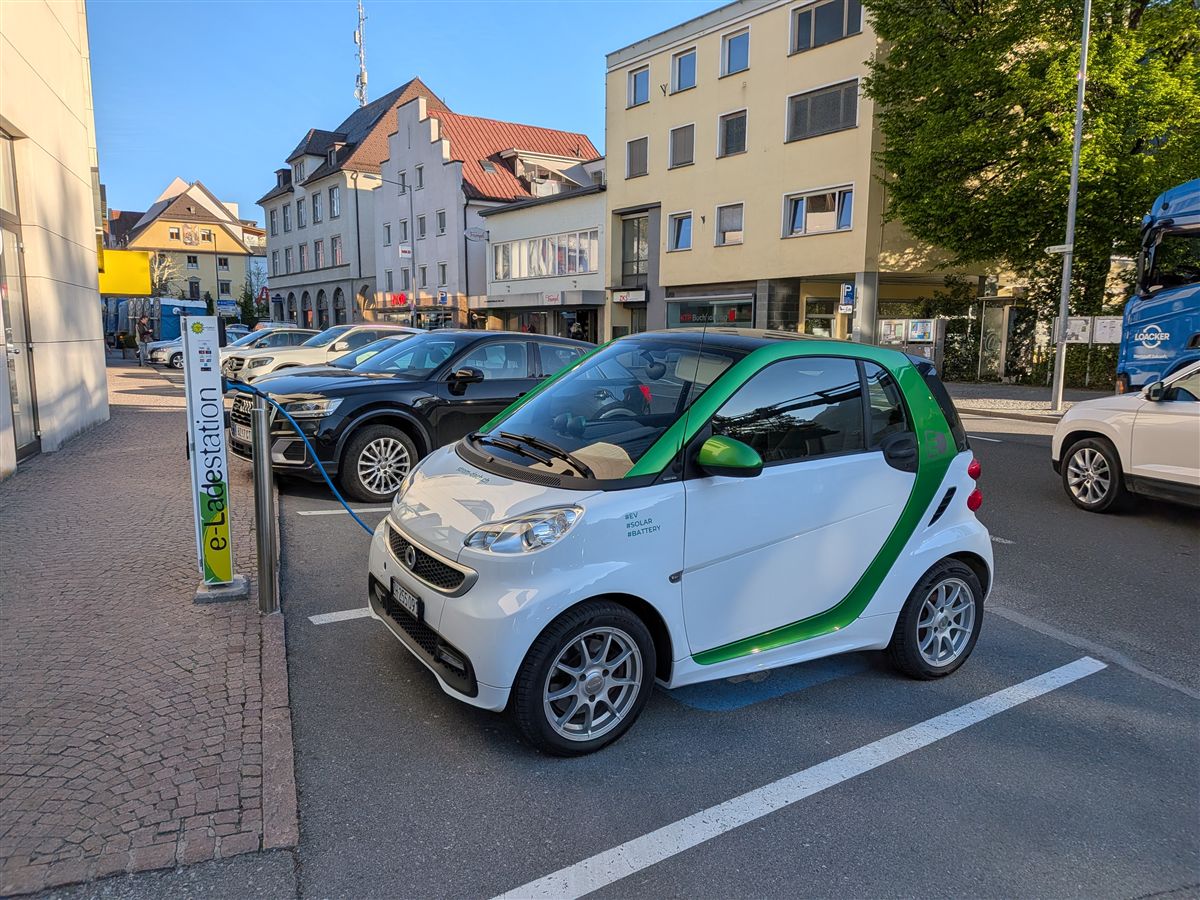
| Bludenz, AT | ~11% | e-Ladestation AC | ~41 min |
| Gewerbepark Imst, AT | ~13% | AC — ELLA charger gone, found alternative | ~40 min |
| Steinach am Brenner, AT | ~23% | ÖAMTC AC | ~35 min |
| Kronplatz ski-resort, Brunico, IT | ~12% | AC | ~107 min |
| Oberdrauburg, AT | ~8% | AC | ~41 min |
| Spittal an der Drau, AT | 0% · 0 km | Hypercharger 22 kW · 9.5 kWh — arrived after 7 km on empty · ~30 min charge, ~47 min McDonald's | 1h 17 min |
| Velden am Wörthersee, AT | — | 4 attempts · 1 working charger found | — |
Day two started with a co-pilot upgrade. The back seat now occupied, thumbs up confirmed, snacks loaded. The mood was considerably better than 5 AM.
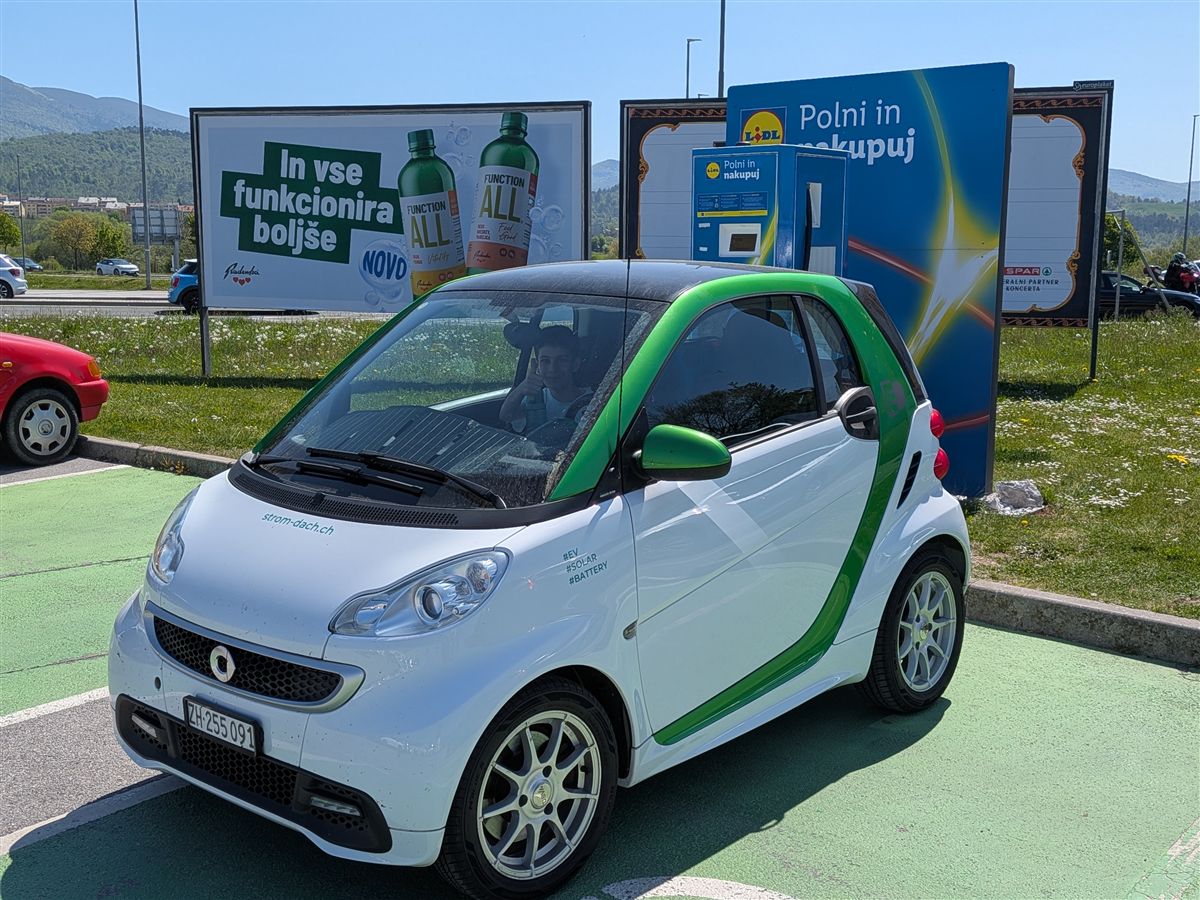
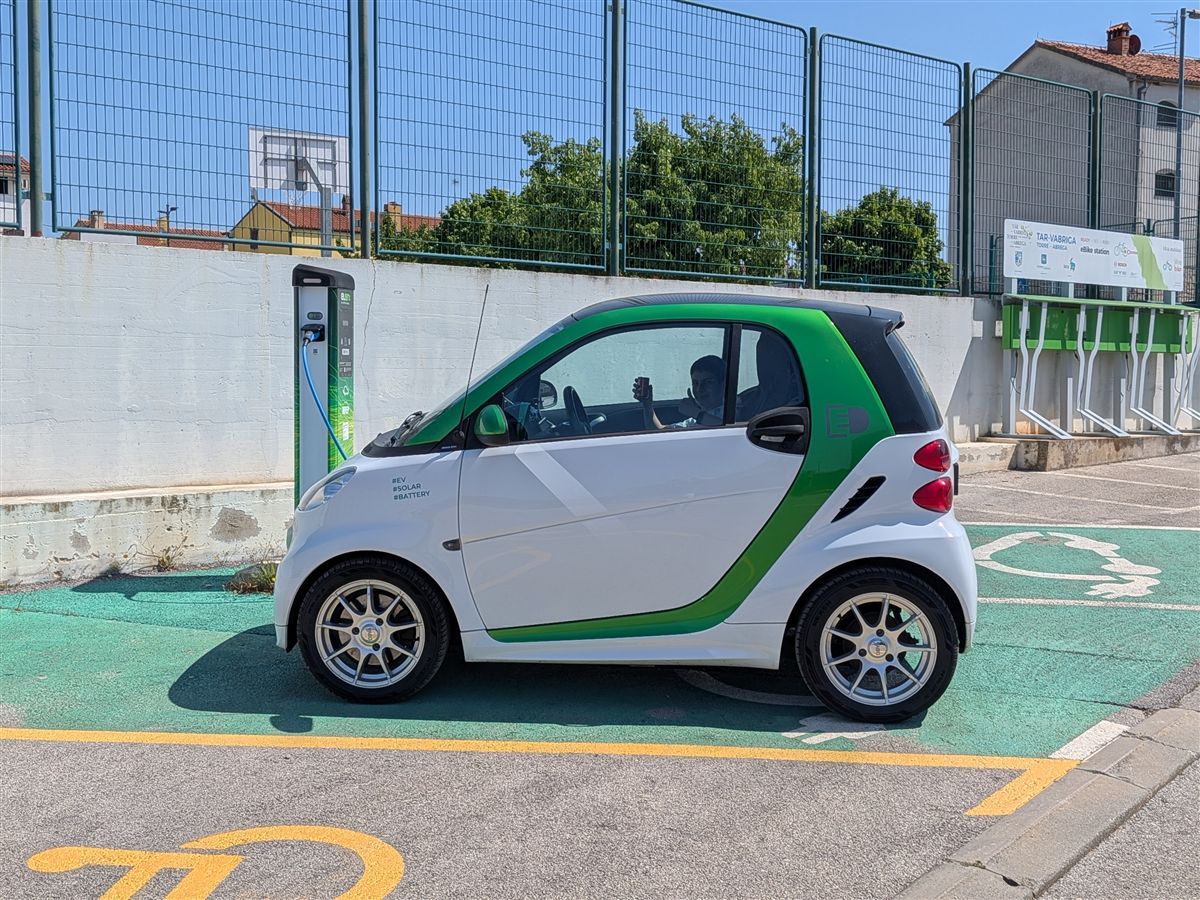
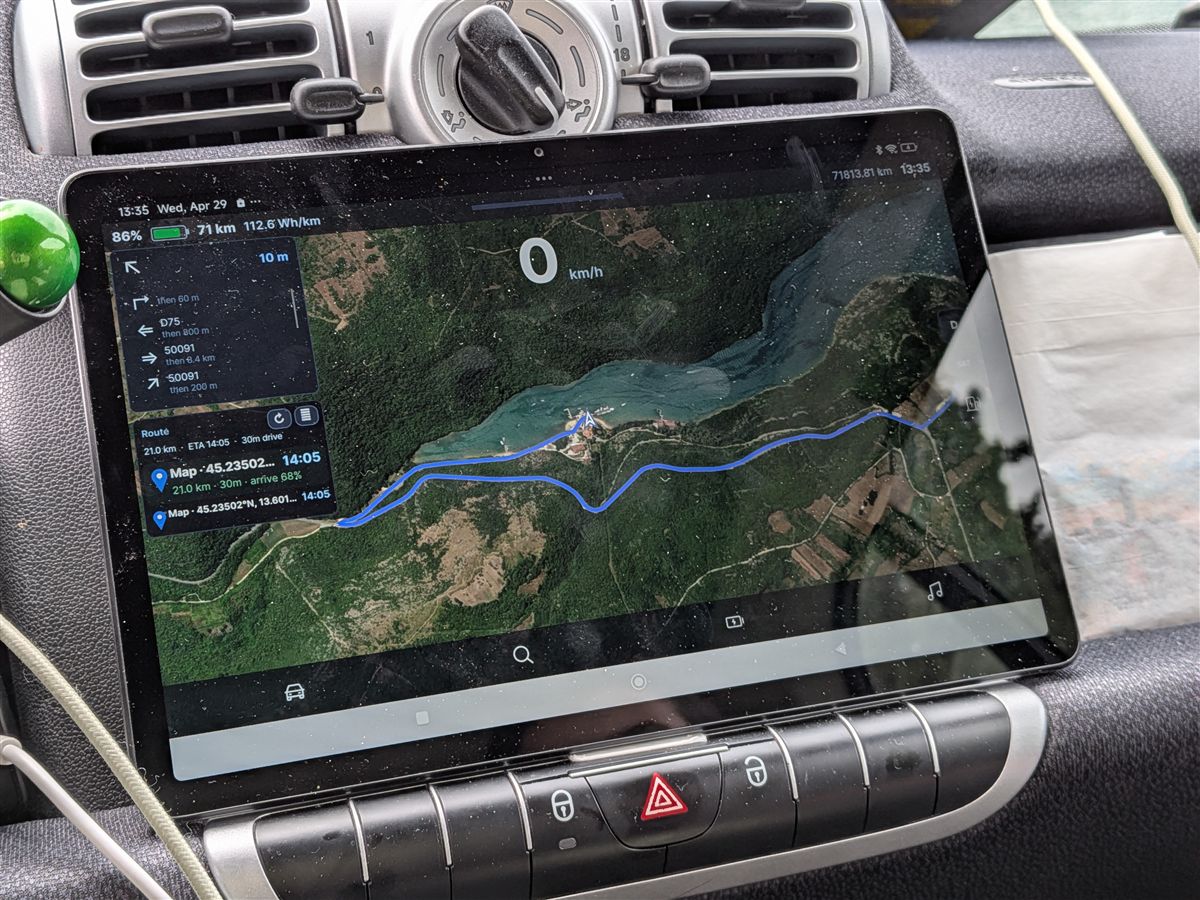
Slovenia moved quickly — a rest stop charger just past the border, then the Lidl in Postojna. Mountains still in the mirror, the karst plateau opening up ahead. Border crossing into Croatia: short queue, no issues. A final stop at an Istarska charger near Poreč and the job was done.
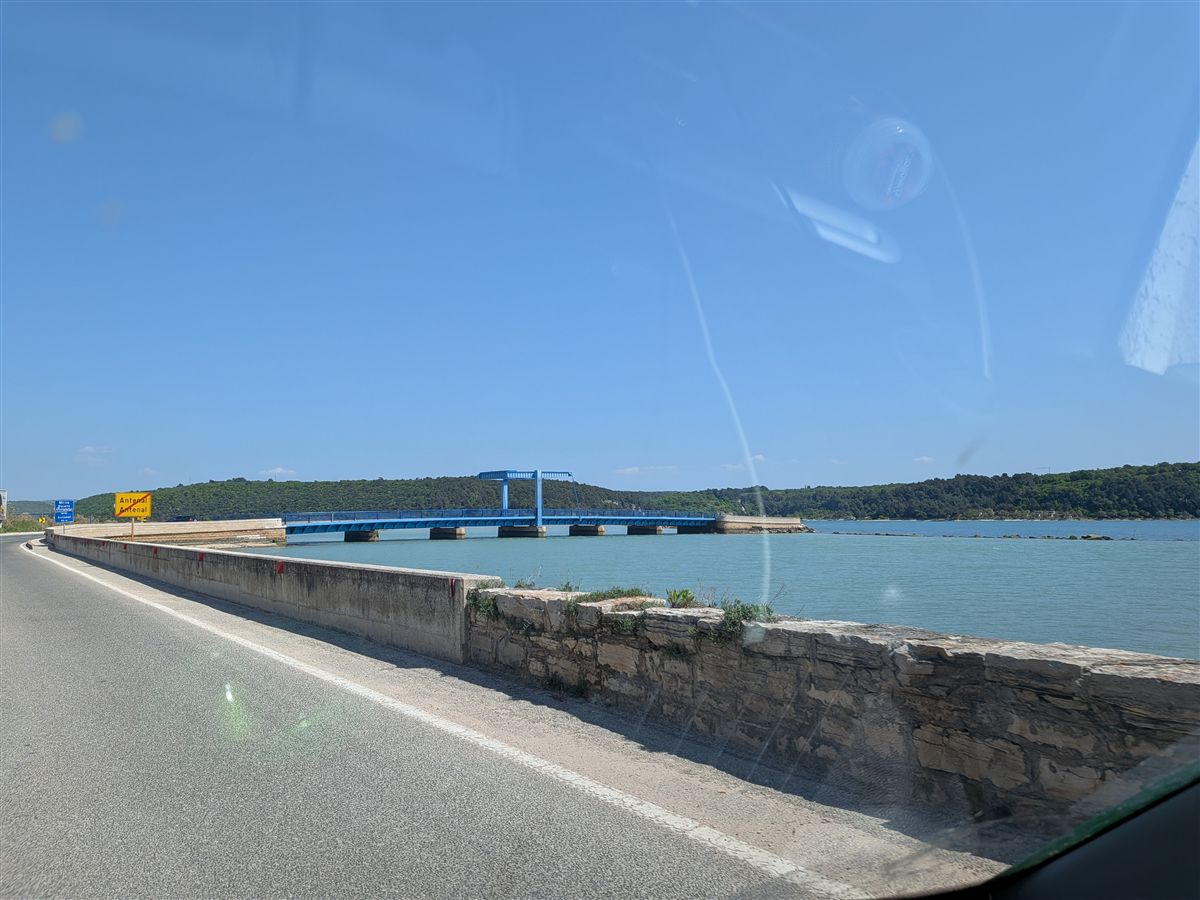
And then — the Adriatic. After 500-something kilometres of concrete and asphalt, the turquoise came out of nowhere. A bend in the road, a blue drawbridge, and the sea on both sides.
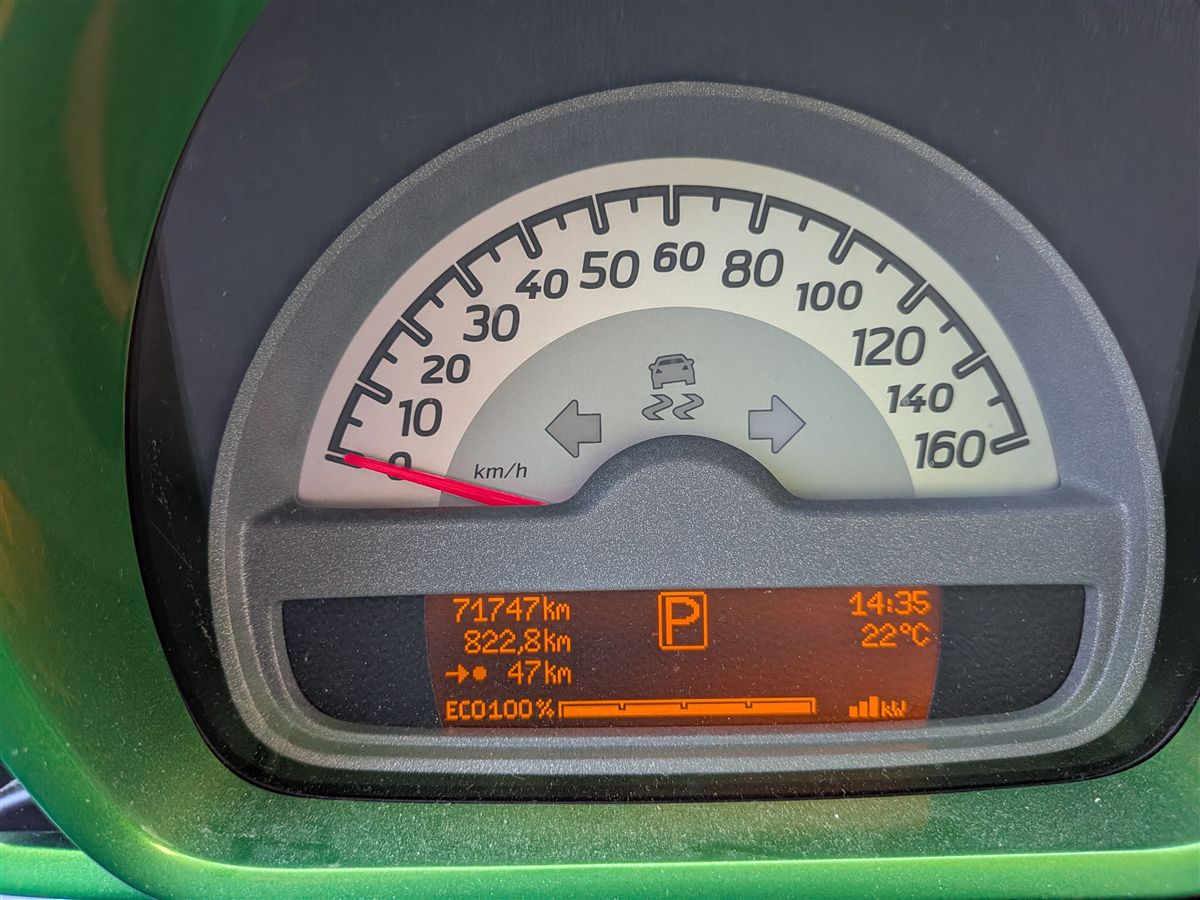
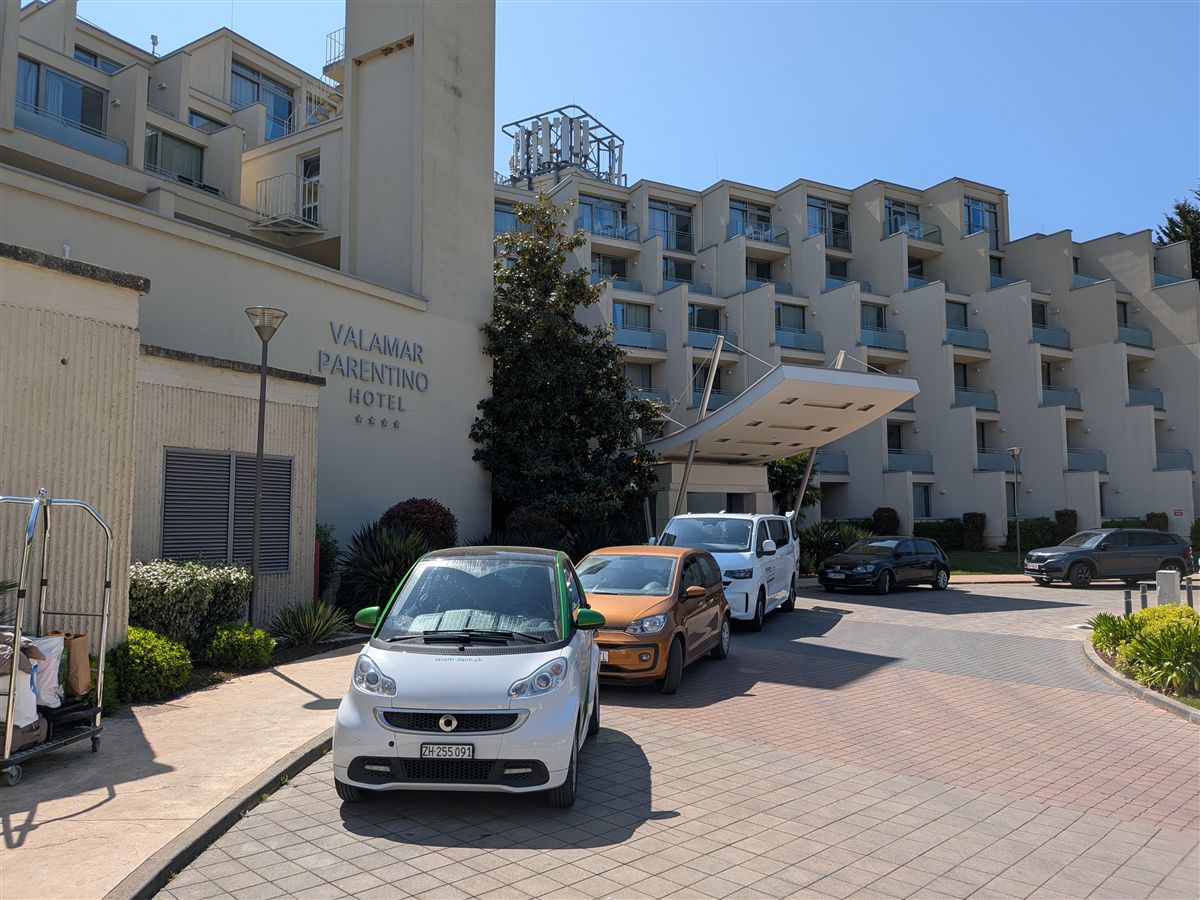
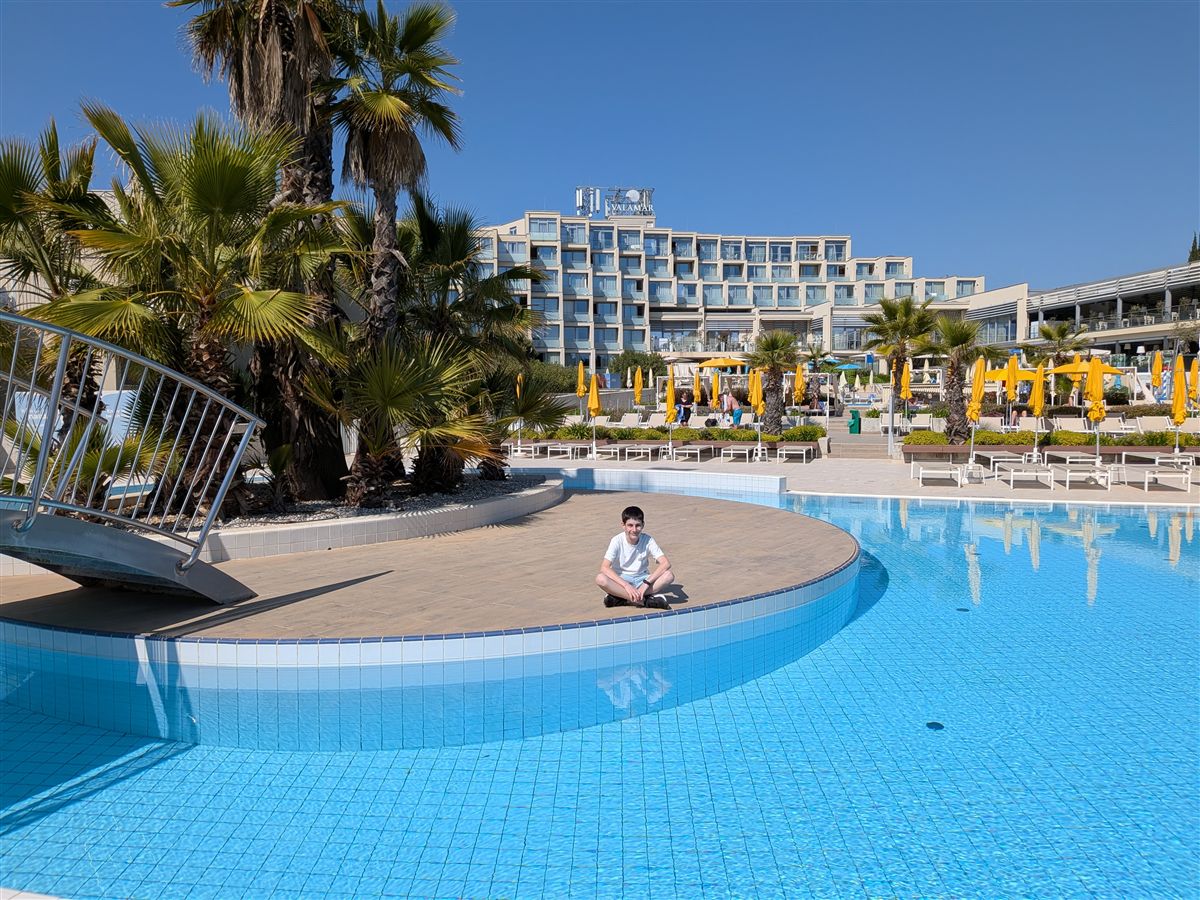
The Valamar Parentino Hotel appeared at the end of a coastal road lined with umbrella pines. Odometer trip: 822.8 km. Range remaining: 47 km. Battery: just enough, exactly as planned.
evOS had routed a final charge stop in Poreč before the hotel — the car arrived with a comfortable buffer rather than another 2% drama. The last charging session was short, the walk to the sea shorter.
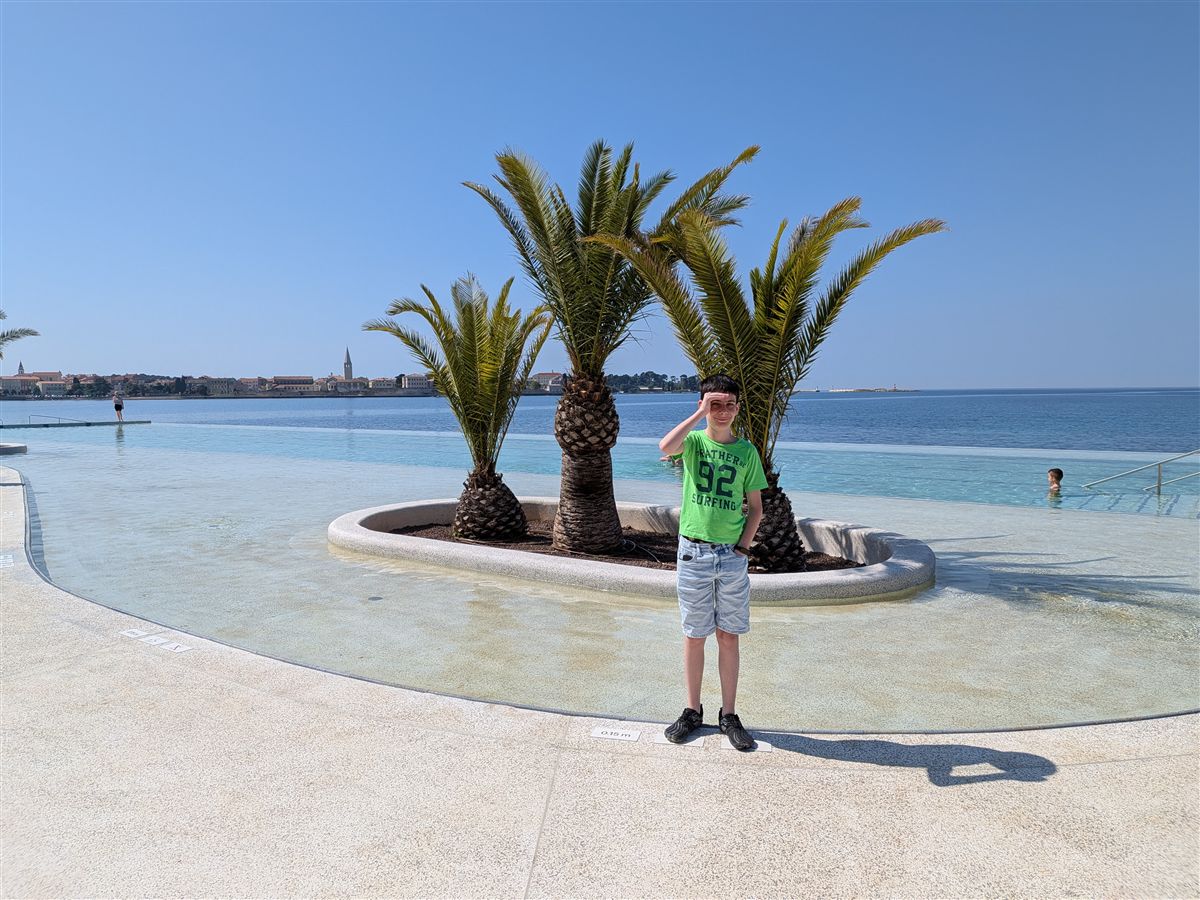
From the pool, the old town tower of Poreč was visible across the water. The car was plugged in. The system had done its job.
Poreč old town is a Roman grid laid out on a peninsula — the Euphrasian Basilica at one end, the harbour at the other. Walking it takes about 20 minutes, which is to say: you'll do it several times.
The car stayed plugged in. No range anxiety, no planning. Just a slow afternoon by the water.
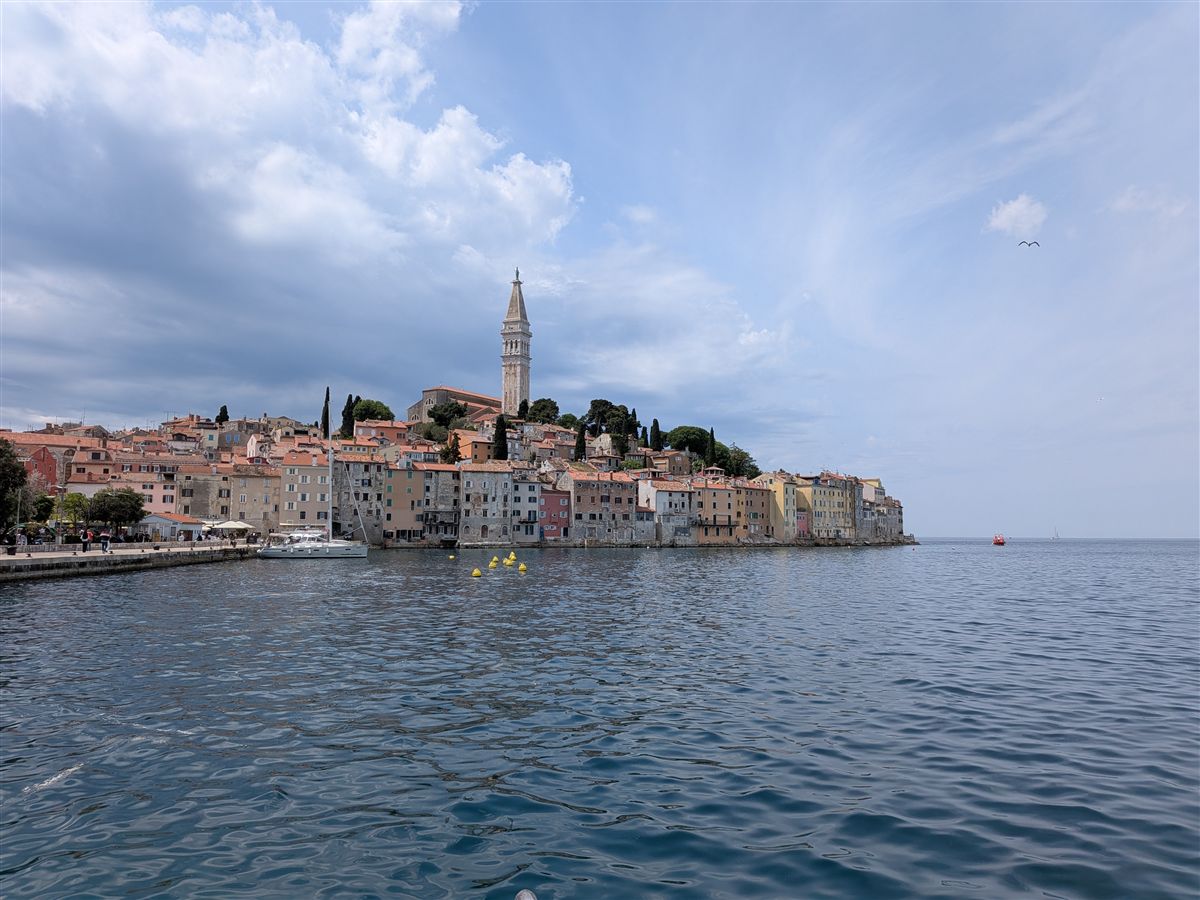
With evOS routing and a full battery, a 70 km day trip to Rovinj and the Lim fjord was a non-event. Planned, executed, returned with range to spare.
An 822 km drive in a 15-year-old EV with a 17.6 kWh battery is not supposed to be relaxing. With evOS, it was. The charge stops were planned, the arrivals were predictable, and the 2% moment was a feature — not a failure.
Long-distance routing in real conditions — Alpine elevation changes, variable charger availability, two-day segments — is solved. The system planned 7 stops, we used 7 stops, and arrived at the hotel with exactly the buffer it promised. Next: the return route.